The two problems: running out and overbuying
A clinic that runs out of anaesthetic or composite cancels patients. A clinic that overbuys ties up cash and throws away expired materials. Good stock control is simply knowing, for each item, how long what is on the shelf will last.
What to track
Not everything needs the same care.
| Type | Examples | How to track |
|---|---|---|
| Used per treatment | Composite, bond, anaesthetic carpules, files, impression material, sutures | Link to treatments, deduct when the treatment is done |
| Used per patient | Gloves, masks, bibs, suction tips, cups | Deduct per visit |
| Used per day | Tissues, disinfectant, cleaning products, coffee | Estimate per day |
| Equipment | Units, compressor, autoclave, X-ray, scanner | Life, service dates, repairs, warranty |
How to know when to reorder
For each item you need three numbers:
- Daily use: how much you really use per day on average.
- Days left: what is on the shelf ÷ daily use.
- Lead time: how many days the supplier takes to deliver.
Example: you use 2 composite syringes a week, have 3 left, and the supplier takes 3 days. Days left = 3 ÷ (2 ÷ 7) ≈ 10. With 4 safety days, order in about 3 days.
Measure real use, not guesses
Your first estimates will be wrong. Each time you count the shelf or receive a delivery, compare the real use with the patients you saw. If gloves "should" last 100 patients a box but really last 70, update the number. After a few deliveries the forecast is accurate.
Counting without wasting time
You do not need to count everything every week. The best moment to count an item is when its delivery arrives: note what was left on the shelf before you add the new stock. That single number tells you the real use since the last delivery.
Expiry dates
Record the lot and expiry date of anaesthetics, bonding agents, impression materials and medicines. Use the oldest first and check monthly what expires in the next 60 days.
Ordering from suppliers
Keep one list of suppliers with their WhatsApp numbers and delivery times. Group what you need by supplier and send one clear message. Record partial deliveries, so you know what is still coming.
Stock and pricing
When every purchase is filed as an expense under the right category, you can see the material cost of each treatment and of each month. That is what makes treatment pricing accurate.
Doing it automatically
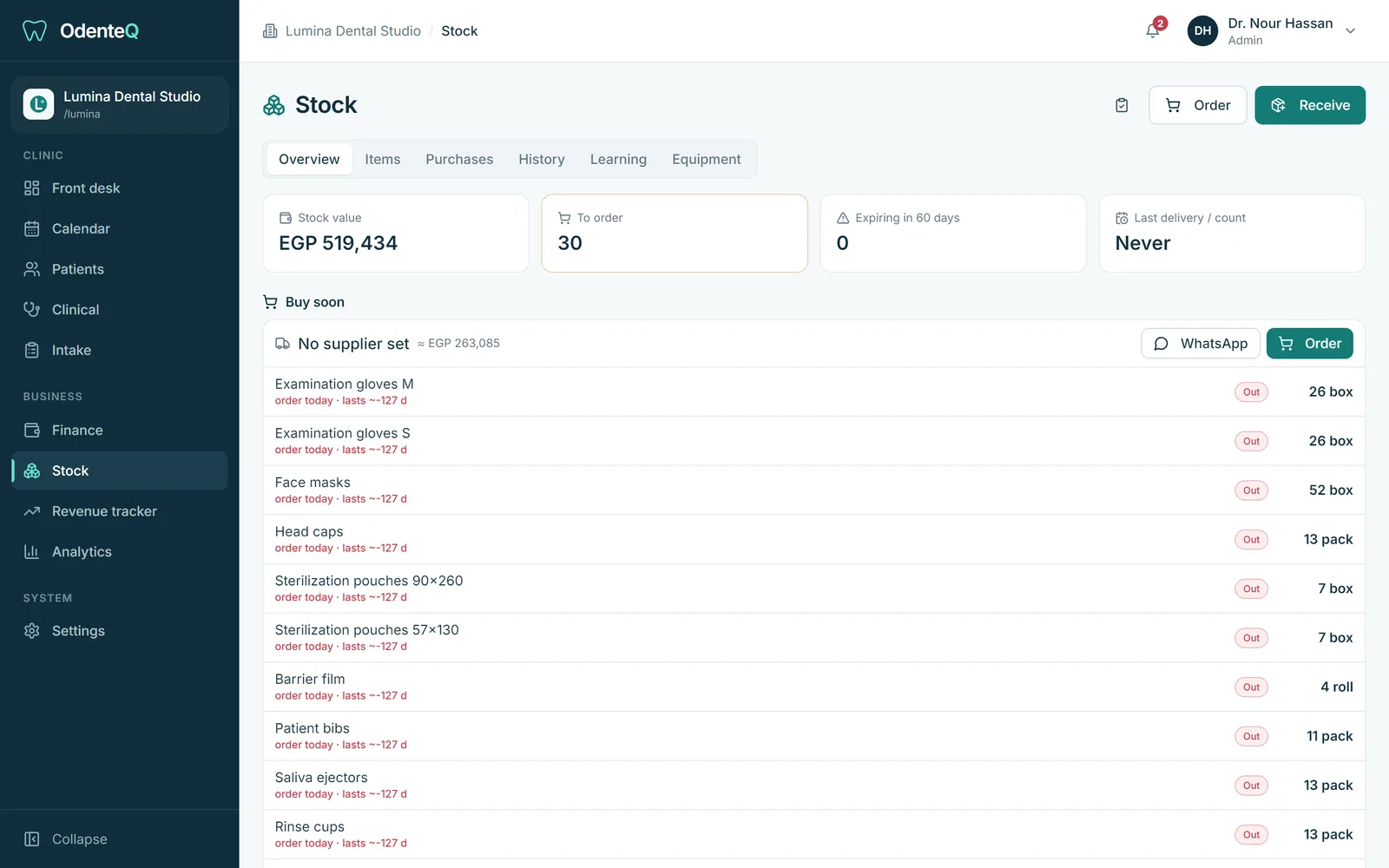
OdenteQ’s stock module deducts materials when treatments are done, learns your real use from deliveries and counts, shows days left and an order-by date per item, groups the next week’s needs by supplier with a WhatsApp order in Arabic, tracks expiry and equipment service, and files purchases as expenses.
Questions
How often should a dental clinic count stock?
Count each item at least when a delivery arrives. A weekly count of fast-moving items helps at the start, until the software has learned your real use.
What dental materials expire?
Local anaesthetics, bonding agents, composites, impression materials, cements and medicines all have expiry dates. Record them with the lot number when you receive stock.