What a no-show really costs
An empty chair still costs rent, salaries and the doctor’s time. If a clinic has 3 no-shows a day at an average visit value of 800, that is 2,400 a day, or more than 60,000 a month in lost production. Even cutting no-shows by half pays for most clinic software many times over.
1. Confirm every appointment the day before
A reminder that the patient never reads does little. A confirmation asks for an answer. The day before, someone at reception goes through tomorrow’s list and gets a yes, a new time or a cancellation from each patient.
In Egypt and the Gulf, WhatsApp is the best channel. Patients read it, they can answer in one word, and it costs nothing. Write the message in the patient’s language and include the doctor, the day and the time.
2. Track the answers, not just the messages
Keep one list for tomorrow with a status for each patient: confirmed, no answer, rescheduled, cancelled. Call the "no answer" patients in the afternoon. A cancelled slot found the day before can be offered to someone on the waiting list. A slot found at the time of the visit is lost.
3. Set a time for the job
Confirmations get forgotten on busy days. Give it a fixed time (for example 2 pm the day before) and a reminder for reception if the list is not finished.
4. Book the next visit before the patient leaves
Patients who leave without a date often never come back, especially in the middle of a treatment plan. When the doctor finishes the visit, they should say when the patient needs to return. Reception books it at checkout.
5. Let patients book the time that suits them
Many patients miss appointments because the time was never good for them. Ask for a preferred part of the day ("after work", "morning") and book inside it. Online booking from your website also helps, because the patient chooses the time themselves.
6. Mark no-shows the same day and rebook
If the patient has not arrived within a grace time (for example 30 minutes), mark the appointment as a no-show and send a short, friendly message offering a new time. Most no-shows are forgetful, not lost.
7. Measure it
Track the no-show rate (no-shows ÷ booked appointments) each month, per doctor and per day of the week. If Saturdays or one doctor’s evening are much worse, you know where to act.
How OdenteQ helps
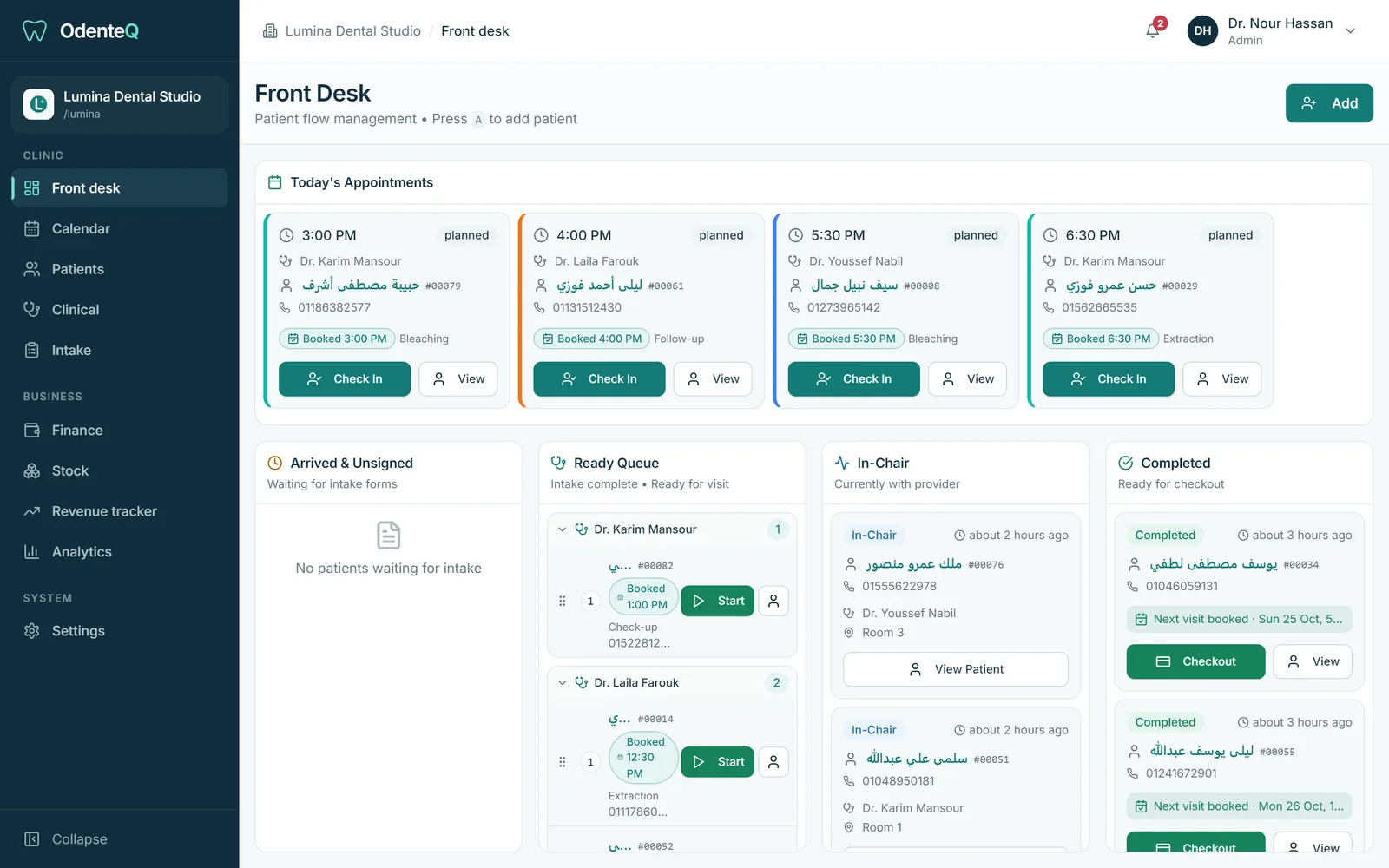
OdenteQ’s calendar has a Confirm tomorrow list with call and WhatsApp buttons that open a ready message in the patient’s language, one-tap statuses, a progress bar and a reminder at the time you choose. Missed appointments are marked as no-shows automatically after the grace time, the doctor chooses the next visit when finishing, and reports show the no-show rate per doctor.
Questions
What is a normal no-show rate for a dental clinic?
It varies widely by clinic and city. Measure your own rate each month and aim to bring it down. Clinics that confirm every appointment the day before usually see a clear drop.
Is SMS or WhatsApp better for dental reminders?
In Egypt and most Arab countries, WhatsApp. Patients read it and can answer in one word. SMS is mostly ignored or blocked.
Should clinics charge for no-shows?
Some clinics take a deposit for long or expensive visits. For regular visits, confirmation and fast rebooking usually work better than fees.